
Hot water
Water heater replacement in Ottawa and Eastern Ontario
Hot water that keeps up
The short answer
What water heaters do for a home
A conventional water heater stores and reheats hot water so the household has it on demand. Choosing one comes down to how much hot water you use at peak times, how fast the unit recovers, and whether you own or rent the equipment.
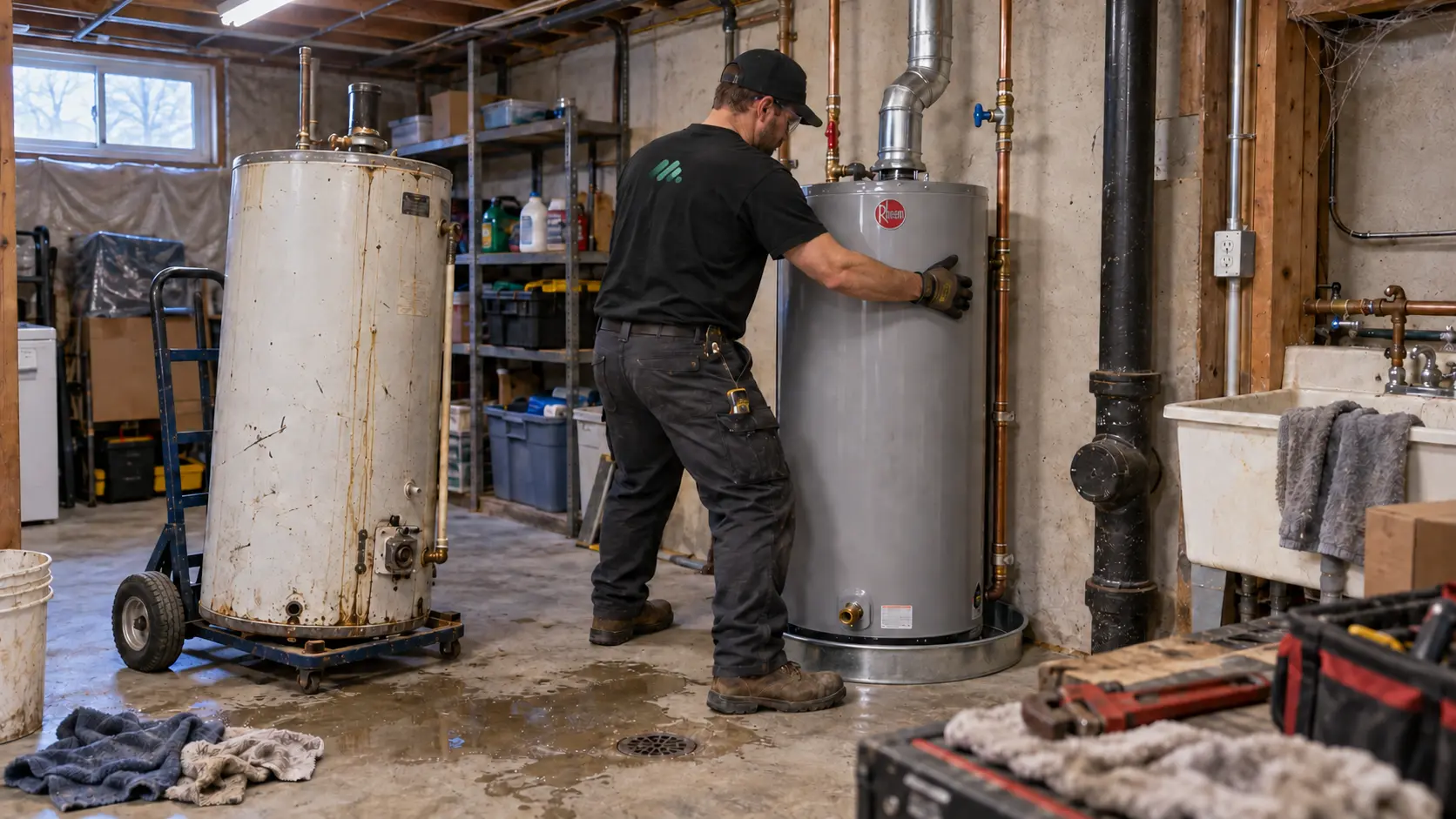
Most replacements we handle are urgent. We size the unit to the household rather than simply matching the tank that failed, and we explain the ownership, rental, and financing implications before anything is installed.
Who this is for
- Households running out of hot water during morning or evening peaks
- Owners of a tank over 10 to 12 years old, or one showing corrosion
- Homeowners currently renting who want to understand the ownership option
- Households whose hot water demand changed after a renovation or a new family member
Problems it solves
- Hot water running out partway through normal household use
- Water around the base of the tank, or rusty water at the tap
- Long waits for hot water at fixtures far from the tank
- A rental agreement whose cost is no longer clear
How it works
In plain language
A storage tank heats water with a gas burner or electric elements and holds it at a set temperature until it is drawn off.
Two figures describe capacity: the tank volume and the first-hour rating, which combines stored volume with how quickly the unit reheats. The first-hour rating is what determines whether you run out.
A tankless unit heats water as it flows instead of storing it. It removes standby loss and the volume limit, but its output is limited by flow rate and incoming water temperature.
Ontario considerations
What this region does to the decision
- Incoming municipal water is cold for much of the year in Eastern Ontario, which lowers tankless output and lengthens tank recovery compared with milder regions.
- Rented water heaters are common in this market. Contract terms, buyout figures, and removal conditions vary, so we check them before recommending a switch to ownership.
- Where a high-efficiency furnace previously shared a chimney with the water heater, venting has to be reassessed as part of the work.
- Fuel-burning water heater work falls under TSSA oversight. Our registration number is 000202850.
Options
Common configurations
- Conventional gas tank
- Strong recovery and simple service. The usual like-for-like replacement.
- Electric tank
- Suits homes without gas service or where venting is impractical. Recovery is slower, so volume matters more.
- Tankless gas unit
- No storage volume limit and no standby loss, but output depends on flow rate and incoming water temperature.
Manufacturers
Equipment we install and support
We install and service equipment from established manufacturers. Which line and model suits your home is decided during your assessment, based on the heat loss of the house, your ductwork and electrical capacity, and availability at the time of installation. Links go to each manufacturer's own website.










Logos are the property of their respective owners and are shown to identify the equipment lines we work with. We are not stating a dealer authorization, exclusive distribution arrangement, or manufacturer endorsement.

TSSA-registered heating fuels contractor
Registration 000202850, issued by the Technical Standards and Safety Authority. Gas-fired equipment in Ontario must be installed by a registered contractor.
Before you decide
Two things you can work out yourself first
Neither tool asks for your contact details and neither stores anything. Both give ranges and possibilities, not quotes or approvals.
Savings calculator
A conservative annual operating-cost range from the bills you already have.
Rebate finder
See which Ontario Home Renovation Savings upgrades may apply to your home.
Sizing and design
- We ask how many people are in the household and what the peak hour looks like — showers, laundry, and dishwasher use together.
- That produces a required first-hour rating, which is what we select against.
- For tankless we check simultaneous flow demand and the temperature rise needed at the coldest time of year.
Installation and what to expect
- Confirm the scope, equipment, and whether the existing unit is owned or rented.
- Isolate and drain the old unit, then remove it from the property.
- Set the new unit with correct water, gas or electrical, venting, and expansion connections.
- Verify combustion and venting where applicable, and check for leaks under pressure.
- Set the temperature to a safe delivery point and confirm operation.
- Explain routine care and what to watch for.
Financing
Buying a water heater outright avoids indefinite rental charges. Financing through Financeit is available to qualified applicants, with approval and terms set by the provider.
Financing is provided by Financeit to qualified applicants. Approval, rates, terms, and product eligibility are determined by the financing provider.
Support after installation
- Annual flushing reduces sediment and helps maintain recovery, particularly on gas tanks.
- Anode rod condition affects tank life and is checked during service.
- Warranty and labour terms are set out in your proposal.

10-Year Premium Warranty Included
Every new equipment installation completed by Aviva includes a 10-year premium warranty package combining manufacturer-backed parts coverage and Aviva labour coverage.
Equipment registration, maintenance requirements, eligible products, exclusions, and the written warranty agreement apply.
Answers
Questions we are asked about this
Start with the home, not the equipment.
Tell us what is not working and what you want to improve. We will help you understand the practical options for your home.