
Hot water
Heat pump water heater installation in Ottawa and Eastern Ontario
Efficient electric hot water
The short answer
What heat pump water heaters do for a home
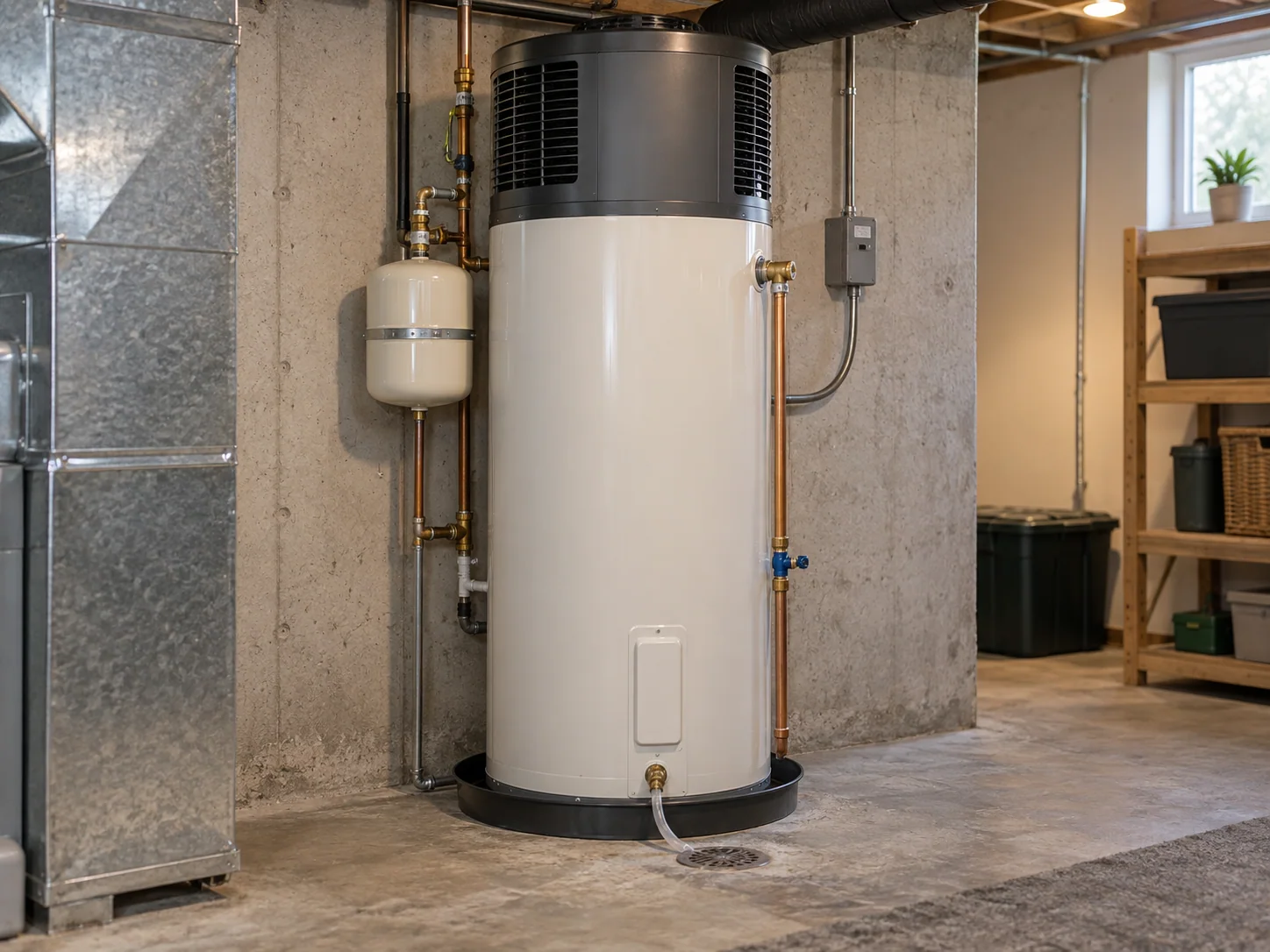
A heat pump water heater is an electric tank that moves heat out of the surrounding air into the water instead of using resistance elements. For the same hot water it typically uses a fraction of the electricity of a standard electric tank.
The tradeoffs are physical. It needs enough air volume around it, a condensate drain, and it cools and dehumidifies the space it sits in. Those requirements decide whether a given basement or utility room suits one.
Who this is for
- Homes currently using a standard electric tank
- Households electrifying heating and hot water together
- Basements that are already humid in summer
- Homeowners pairing hot water with a solar installation
Problems it solves
- High electricity cost from resistance water heating
- A damp basement that would benefit from dehumidification
- Wanting to reduce fuel use without giving up hot water capacity
- Uncertainty about whether the utility room is large enough
How it works
In plain language
A small heat pump on top of the tank draws in room air, extracts heat from it, and transfers that heat to the stored water. Cooler, drier air is discharged back into the room.
Because it moves heat rather than generating it, it delivers several units of heat per unit of electricity. Backup resistance elements cover unusually heavy demand.
Most units offer modes that trade efficiency against recovery speed, from heat-pump-only through to full electric operation.
Ontario considerations
What this region does to the decision
- In an Ontario basement the summer dehumidification is usually welcome. In winter the unit draws heat from a space your heating system is warming, which offsets part of the saving.
- Unfinished basements common in this region generally have the air volume and drainage these units require. Small closets and sealed mechanical rooms often do not.
- Units are taller than the electric tanks they replace, so overhead clearance has to be checked before ordering.
- Electrical capacity should be verified alongside any other planned electrification.
Options
Common configurations
- Standard hybrid tank
- Heat pump with resistance backup and selectable modes. The usual choice for a basement installation.
- Ducted installation
- Intake or discharge air ducted when the room alone cannot supply enough air volume.
- Larger-capacity tank
- Extra stored volume compensates for slower heat-pump recovery in a high-demand household.
Manufacturers
Equipment we install and support
We install and service equipment from established manufacturers. Which line and model suits your home is decided during your assessment, based on the heat loss of the house, your ductwork and electrical capacity, and availability at the time of installation. Links go to each manufacturer's own website.










Logos are the property of their respective owners and are shown to identify the equipment lines we work with. We are not stating a dealer authorization, exclusive distribution arrangement, or manufacturer endorsement.
Before you decide
Two things you can work out yourself first
Neither tool asks for your contact details and neither stores anything. Both give ranges and possibilities, not quotes or approvals.
Savings calculator
A conservative annual operating-cost range from the bills you already have.
Rebate finder
See which Ontario Home Renovation Savings upgrades may apply to your home.
Sizing and design
- We check room volume, clearances, and ceiling height against the manufacturer's requirements first — if the space does not qualify, capacity is irrelevant.
- Then we size stored volume and recovery against your peak-hour hot water demand, allowing for slower heat-pump-mode recovery.
- We confirm the electrical circuit and a route for condensate drainage.
Installation and what to expect
- Assess the room for air volume, clearance, height, drainage, and electrical supply.
- Confirm equipment, mode strategy, and any ducting in the written scope.
- Remove the existing unit and prepare connections.
- Set the tank, connect water, electrical, and condensate drainage.
- Commission the unit, set the operating mode and temperature, and check for leaks.
- Explain filter cleaning, mode selection, and what the noise level will be.
Financing
These units cost more up front than a standard electric tank and are often financed. Efficiency programs for them change, so eligibility is confirmed at assessment rather than advertised here.
Financing is provided by Financeit to qualified applicants. Approval, rates, terms, and product eligibility are determined by the financing provider.
Support after installation
- The air filter needs periodic cleaning, similar to a range hood filter.
- Condensate drainage should be checked so it stays clear.
- Warranty and labour terms are set out in your proposal.

10-Year Premium Warranty Included
Every new equipment installation completed by Aviva includes a 10-year premium warranty package combining manufacturer-backed parts coverage and Aviva labour coverage.
Equipment registration, maintenance requirements, eligible products, exclusions, and the written warranty agreement apply.
Answers
Questions we are asked about this
Start with the home, not the equipment.
Tell us what is not working and what you want to improve. We will help you understand the practical options for your home.