
Energy generation
Residential solar panel installation in Ottawa and Eastern Ontario
Generate some of your own electricity
The short answer
What solar panels do for a home
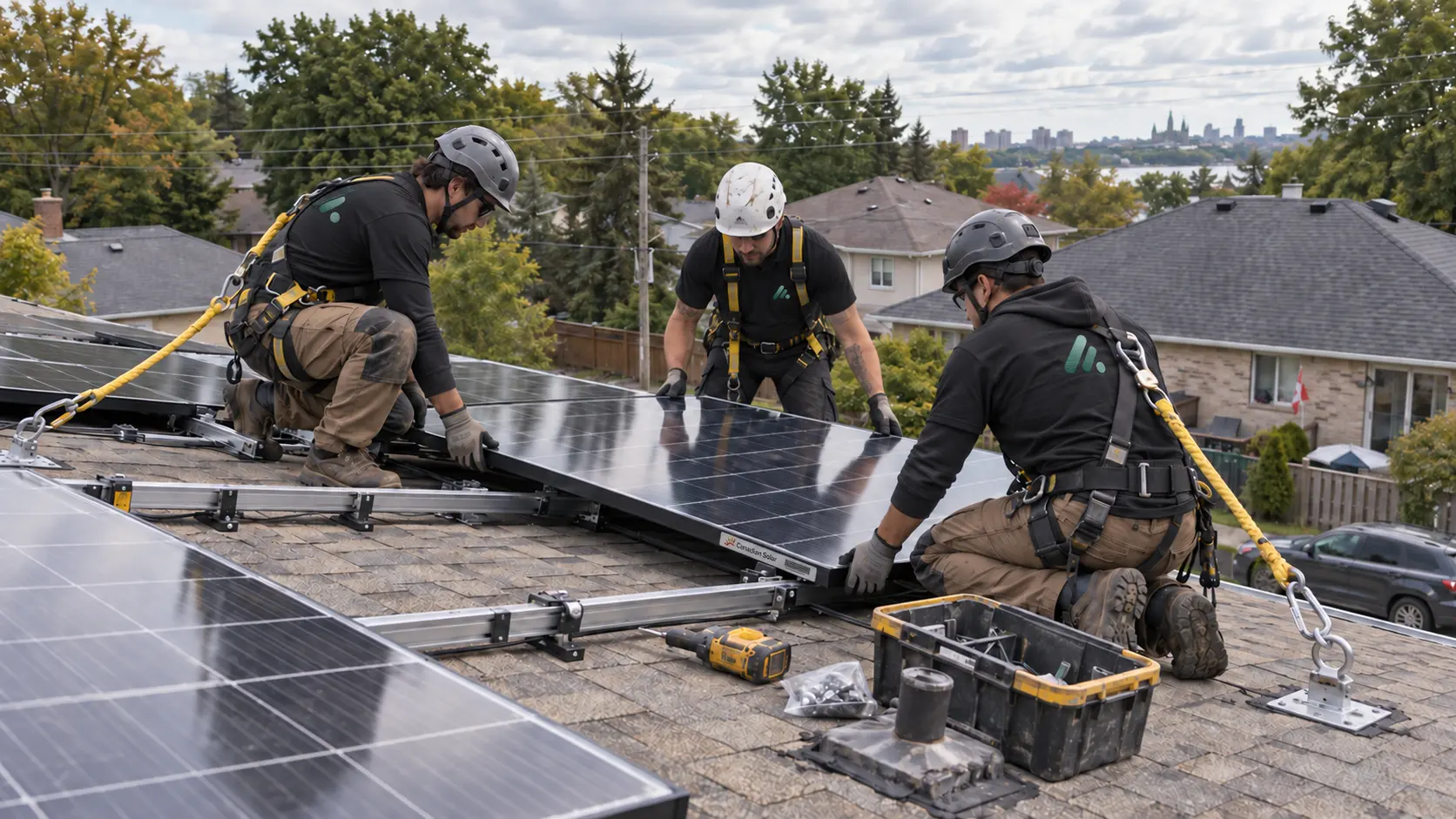
A rooftop solar system converts sunlight into electricity your home can use immediately, with any surplus handled according to your utility's rules. Whether it makes sense for a specific house comes down to roof condition, orientation, shading, and how much electricity the household actually uses.
We assess those four things before proposing a system size. Any savings figure we show is a model with its assumptions stated, not a guarantee.
Who this is for
- Homes with a south, southeast, or southwest facing roof in reasonable condition
- Households with rising electricity use, including those adding a heat pump or electric vehicle
- Homeowners planning to stay in the home long enough for a long-payback investment
- Owners who want to pair generation with electrification of heating or hot water
Problems it solves
- Electricity costs climbing faster than expected
- New electrical loads from heat pumps, hot water, or vehicle charging
- Uncertainty about whether a specific roof is even suitable
- Quotes that show a payback figure without showing the assumptions
How it works
In plain language
Panels generate direct current when light strikes them. An inverter converts that to alternating current at the voltage your home uses.
Generated power supplies the house first. Surplus is exported or credited according to your utility's current program, and you continue to draw from the grid when generation is low.
Output varies with season, weather, and shading. A realistic annual estimate uses local irradiance data and a shading analysis of the actual roof, not a national average.
Ontario considerations
What this region does to the decision
- Eastern Ontario receives strong summer irradiance and much weaker winter sun, so an annual estimate matters more than a single peak figure.
- Snow cover reduces winter output. Panel tilt, roof pitch, and array placement affect how quickly snow sheds.
- Roof age is decisive. If shingles are within several years of replacement, replacing them before installation avoids removing and reinstalling the array later.
- Structural loading, attachment detailing, and electrical interconnection all have to meet code and the local utility's requirements.
Options
Common configurations
- Roof-mounted grid-connected system
- The usual residential arrangement where roof area and orientation allow it.
- Partial-roof or split array
- Panels placed on the best available planes when one section is shaded or obstructed.
- Solar paired with electrification
- Sized against a future load that includes a heat pump or heat pump water heater rather than today's consumption alone.
Manufacturers
Equipment we install and support
We install and service equipment from established manufacturers. Which line and model suits your home is decided during your assessment, based on the heat loss of the house, your ductwork and electrical capacity, and availability at the time of installation. Links go to each manufacturer's own website.









Logos are the property of their respective owners and are shown to identify the equipment lines we work with. We are not stating a dealer authorization, exclusive distribution arrangement, or manufacturer endorsement.
Before you decide
Two things you can work out yourself first
Neither tool asks for your contact details and neither stores anything. Both give ranges and possibilities, not quotes or approvals.
Savings calculator
A conservative annual operating-cost range from the bills you already have.
Rebate finder
See which Ontario Home Renovation Savings upgrades may apply to your home.
Sizing and design
- We start from twelve months of your electricity consumption, then model production for your specific roof planes.
- A shading assessment accounts for trees, chimneys, dormers, and neighbouring buildings across the year.
- The proposal states the assumptions behind any savings estimate: consumption used, production model, electricity rate, and escalation. Change an assumption and the number changes.
Installation and what to expect
- Site assessment covering roof condition, structure, attic access, and electrical service.
- System design, production model, and written proposal with stated assumptions.
- Permits and utility interconnection paperwork.
- Mounting, flashing, and array installation with attention to waterproofing detail.
- Inverter and electrical connection, then inspection and utility authorization.
- Commissioning, monitoring setup, and a walkthrough of what normal output looks like.
Financing
Solar is a larger capital project, so financing through Financeit is common. Approval, rates, and terms are set by the provider. Program eligibility is confirmed at assessment, not advertised in advance.
Financing is provided by Financeit to qualified applicants. Approval, rates, terms, and product eligibility are determined by the financing provider.
Support after installation
- Monitoring lets you see production and catch an underperforming string early.
- Panels need little routine cleaning in this climate; inspection focuses on attachments, flashings, and electrical connections.
- Manufacturer and workmanship coverage is set out in your proposal.

10-Year Premium Warranty Included
Every new equipment installation completed by Aviva includes a 10-year premium warranty package combining manufacturer-backed parts coverage and Aviva labour coverage.
Equipment registration, maintenance requirements, eligible products, exclusions, and the written warranty agreement apply.
Answers
Questions we are asked about this
Start with the home, not the equipment.
Tell us what is not working and what you want to improve. We will help you understand the practical options for your home.